
Protecting What Matters, Part 9: Farms for Farmers’ Markets and Rural Communities
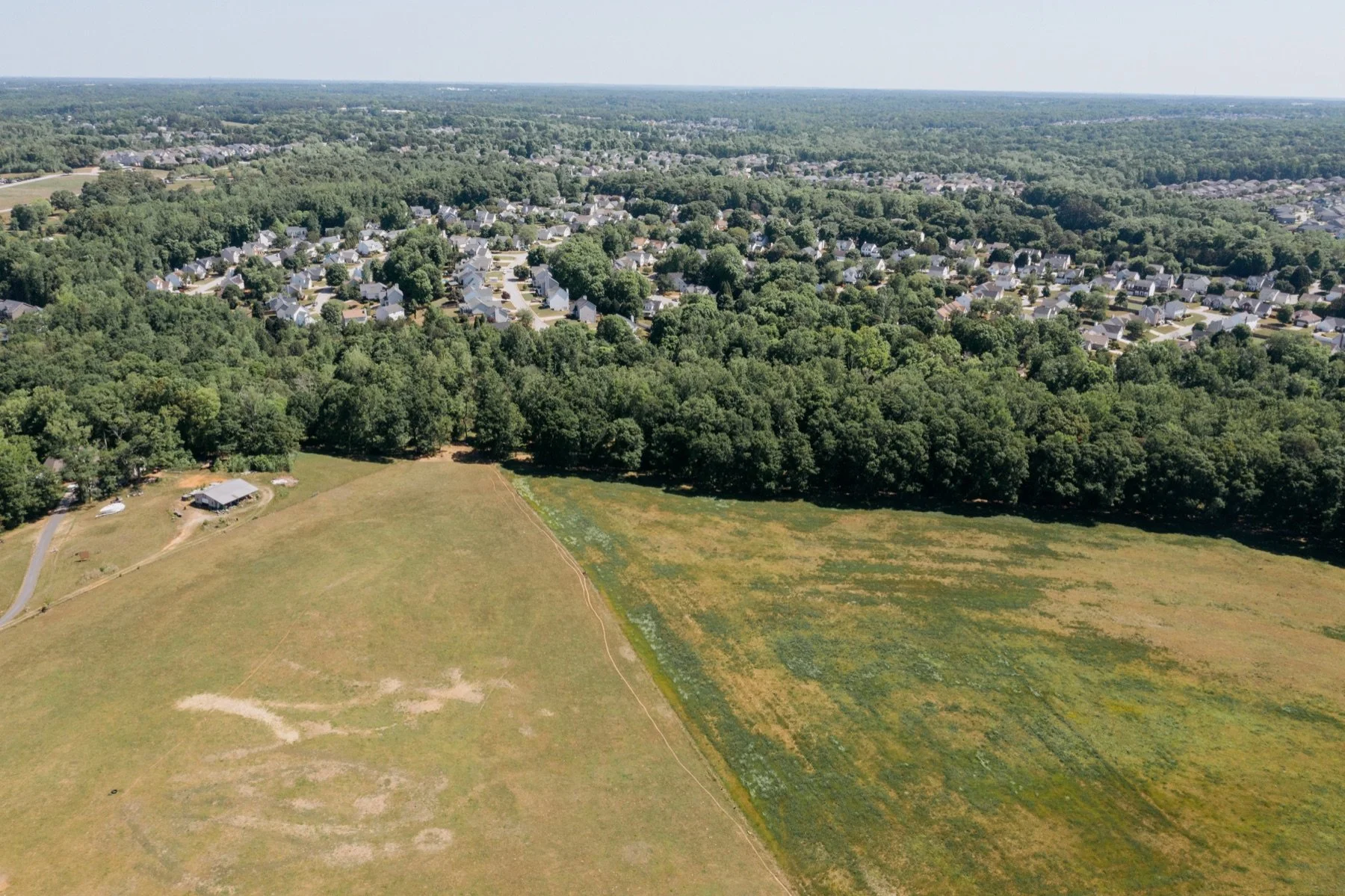
Drive through southern Greenville County and you still see something increasingly rare: Working farms. Open fields. Pastures. Forests. Country roads. They don't just produce food. They create the rural character of southern Greenville County.
And once they're developed, we don't get them back.
The Numbers Should Get Our Attention
According to the USDA Census of Agriculture, between 2017 and 2022 alone, Greenville County lost:
11% of its farms
11% of its farmland
And since 1990 we have lost more than 1/3 of our farmland, over 25,000 acres.
Greenville County's Comprehensive Plan recognizes the threat and specifically calls for protecting prime farmland, purchasing development rights and using agricultural conservation easements. And nowhere is that opportunity more visible than southern Greenville County.
The County's South Greenville Area Plan actually begins with this goal: "Preserve the Rural Character," and specifically recommends conservation easements and other tools to accomplish it.
Why Save Working Farms? Food Security Starts With Land.
We have become accustomed to food traveling hundreds, even thousands, of miles before reaching our tables. That system is remarkably productive. But it isn't invulnerable.
Centers for Disease Control and Prevention (CDC) investigations show how contamination originating in growing, processing or distribution systems can become multistate outbreaks. In 2022 alone, contaminated foods involved in 26 solved multistate outbreaks caused 882 illnesses, 304 hospitalizations and 16 deaths. Remember cyclospora this summer?
Local agriculture doesn't eliminate food-safety risk. But maintaining a healthy network of local and regional farms gives a community something valuable: a more diverse and resilient food system. Local farms can supply farmers markets, restaurants, schools, institutions and other local buyers, reducing our dependence on distant supply chains.
A Farm Grows More Than Food
An undeveloped working farm can also provide:
Open space
Wildlife habitat
Groundwater recharge
Floodwater storage
Forests and stream buffers
Scenic views
Rural character
Ecotourism opportunities
Those benefits disappear when the fields are lost to development. Arable land is a finite and irreplaceable gift.
Farmers Don't Have to Give Up Their Land to Save It
That's the beauty of a perpetual agricultural conservation easement. The farmer keeps the farm. The land remains privately owned. It can be farmed. It can be sold. It can pass to children and grandchildren. But most development rights are voluntarily removed, so the farm stays a farm. That can give landowners another financial option besides selling their property for development.
Southern Greenville County Is a Choice We Are Making Right Now
The question isn't whether southern Greenville County will change. Growth is already here and more is coming. The question is whether we allow growth to consume virtually every available acre or deliberately preserve a working rural landscape alongside that growth.
Imagine southern Greenville County where, 50 years from now, development is interspersed with:
Working farms
Forests
Stream corridors
Pastures
Local food production
Wildlife habitat
It won't happen accidentally. We have to plan for it.
What If Greenville County Got More Aggressive?
Identify the most important remaining farms now
Prioritize large, contiguous farms and those adjoining other protected lands
Expand funding for voluntary agricultural conservation easements
Use County dollars to leverage state, federal and private conservation funds
Protect stream corridors and forests along with farmland
Build a connected Southern Greenville Rural Conservation Corridor before fragmentation makes it impossible
This Is About More Than Farmers Markets
It's about whether future generations will inherit a Greenville County that still has room to grow food, absorb rain, shelter wildlife and enjoy the countryside.
Greenville County has already created an Agricultural Preservation District specifically to preserve prime farmland and maintain economically viable agriculture. Now we have an opportunity to pair good land-use policy with permanent land protection.
A new neighborhood can be built in a few months. A farm can take generations to build. Let's make sure southern Greenville County always has both.
