
A century of loss—and a chance to change it. Black ownership of farms and forests peaked around 1920 at just under a million families and roughly 16–19 million acres. Since then, while the Black population more than tripled, ownership plummeted by over 97%. A targeted grant from Greenville Women Giving is helping the Greenville County Historic & Natural Resources Trust study local conditions and partner with landowners to stem the decline. The finding was stark: in Greenville County, only ~1% of farms are owned by people of color.
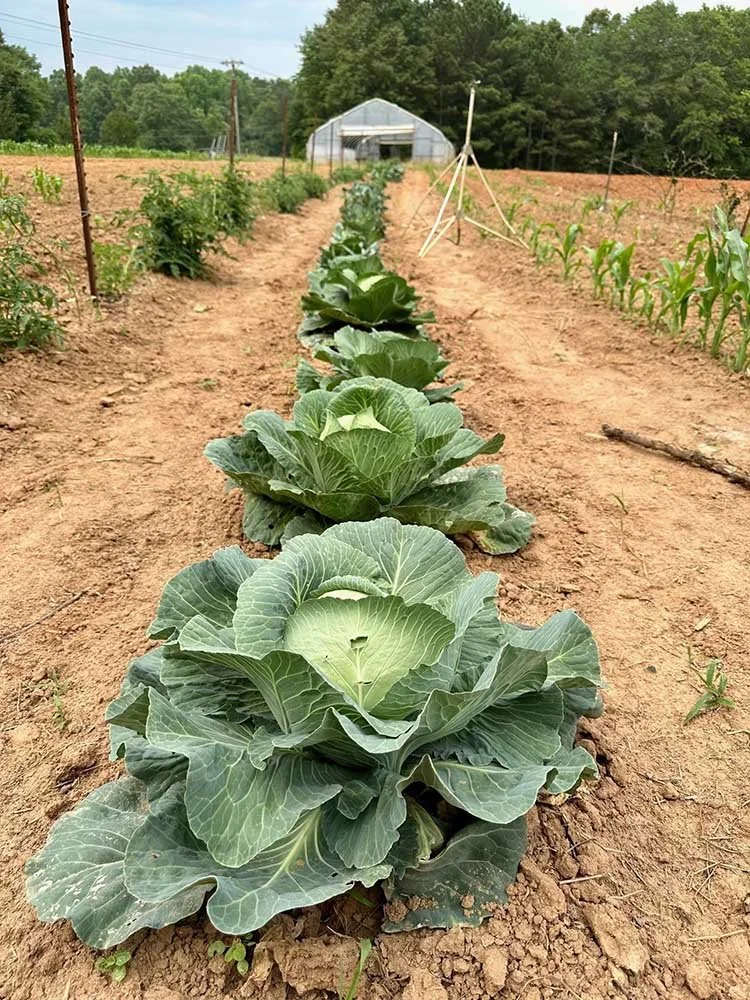
A bright spot: Harrison Farm
Working with the SC Farm Bureau Land Trust, we’re in active conversations with two African American families. Another has already crossed the finish line: Bryant and Margaret Harrison of “Possum Kingdom,” who’ve farmed their land for more than 50 years, protected it permanently with a conservation easement.
Farm to table needs local farmers
The Harrisons’ sweet potatoes, onions, collards, and more are staples at places like Swamp Rabbit Café & Grocery. Yes, every city in the county now hosts a farmers’ market—but without local growers, those markets risk becoming showcases for produce shipped in from far away. Keeping farms local keeps “farmers” in farmer’s markets.
What the easement made possible (for the Harrisons)
Land stays land. Their 100+ acres are shielded from development forever while remaining private property.
Family legacy. The farm can be passed on to their children, sold to another producer, transitioned to timber, or simply enjoyed as open space—without pressure to subdivide.
Financial resilience. Proceeds from selling the easement, plus federal charitable deductions and state tax credits on any donated value, provided a crucial one-time financial infusion.
Benefits for all of us
Clean water & habitat. More than 100 acres continue filtering runoff, protecting streams, and providing wildlife refuge—benefits we’d lose if fields became rooftops.
Local food security. We keep access to healthy, nearby produce grown by people our community knows and trusts.
Cultural continuity. The Harrison farm extends the legacy of Black farmers whose work has shaped American agriculture.
Bottom line:
Conservation easements are a practical, respectful way to sustain minority-owned farms—honoring family legacies while delivering everyday public benefits.
Reference: USDA National Agricultural Statistics Service, 2022 Census of Agriculture
