
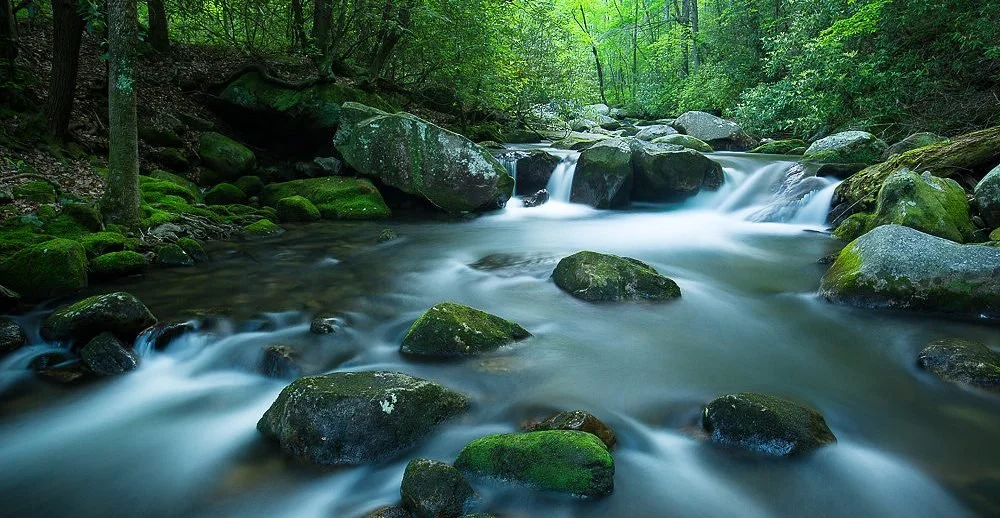
Sometimes the Best Water Treatment Plant Is a Forest
When you think about water utility infrastructure, you usually picture pipes, pumps, reservoirs, and treatment plants. But increasingly, utilities are investing in another kind of infrastructure: LAND.
Why? Because protecting forests, wetlands, and stream buffers upstream can help keep sediment and pollutants out of drinking-water supplies before they ever reach the treatment plant. Protect the source. Reduce the problem. Protect the customer.
Raleigh Showed What Was Possible
In 2005, the City of Raleigh, North Carolina, created what became the Upper Neuse Clean Water Initiative. Rather than relying solely on increasingly expensive treatment, Raleigh partnered with conservation organizations and willing landowners to protect forests, floodplains and stream buffers feeding its drinking-water reservoirs.
Early outside investment, including support from Greenville-based U.S. Endowment for Forestry and Communities, helped demonstrate the model. Raleigh ultimately created its own dedicated watershed-protection funding mechanism.
Today, water customers contribute 15 cents per 1,000 gallons used ... about 60 cents a month for the average household. The result? 10,800 ACRES PROTECTED including 117 MILES OF STREAMS. All within critical drinking-water watersheds.
Now Look at What Is Happening Here at Home
Easley Combined Utilities (ECU) draws drinking water from Saluda Lake, fed by the North, Middle and South Saluda Rivers.
The challenge became painfully clear when ECU spent more than $7 million dredging excess sediment from Saluda Lake in 2011. That raises a simple question: What if you could prevent some of that sediment from getting there in the first place? ECU began investing with conservation partners to protect land upstream.
Working with Naturaland Trust and others, ECU has invested more than $1 million in Upstate land protection, including $500,000 toward the 1,090-acre Saluda Bluffs project along the South Saluda River in Pickens County. Some of those investments have been in Greenville County: the 160-acre River Falls addition to Jones Gap State Park on the Middle Saluda River and the 180-acre Saluda Gorge project on the North Saluda River. Both help stretch local taxpayer investment.
ECU General Manager Andy Sevic put the economics plainly: "It's much more cost-effective for us to protect drinking water at the source than to treat it later."
Think of It as Two Kinds of Infrastructure
Gray infrastructure: pipes, pumps, treatment plants, reservoirs.
Green infrastructure: forests, wetlands, floodplains, stream buffers.
We need both.
A protected forest doesn't replace a water-treatment plant. But it can help the treatment plant do its job by keeping soil, sediment, and pollutants out of the water in the first place. And conserved watershed land provides benefits that concrete infrastructure can't: cleaner source water; less erosion and sediment; flood protection; wildlife habitat; protected river corridors; and, where appropriate, public recreation.
The Lesson for Greenville County?
Some of the smartest conservation investments may come not just from parks departments and conservation organizations, but from the utilities that depend on healthy land to deliver clean water. Raleigh has been doing it for more than 20 years. Easley Combined Utilities is doing it right here in the Upstate. Protecting land isn't separate from investing in infrastructure. Sometimes, protecting the land IS investing in infrastructure.
