
How a Trail Revitalized Travelers Rest
The Prisma Health Swamp Rabbit Trail helped transform Travelers Rest from a pass-through town into one of South Carolina’s most vibrant trail-based communities.
From Highway Stop to Destination
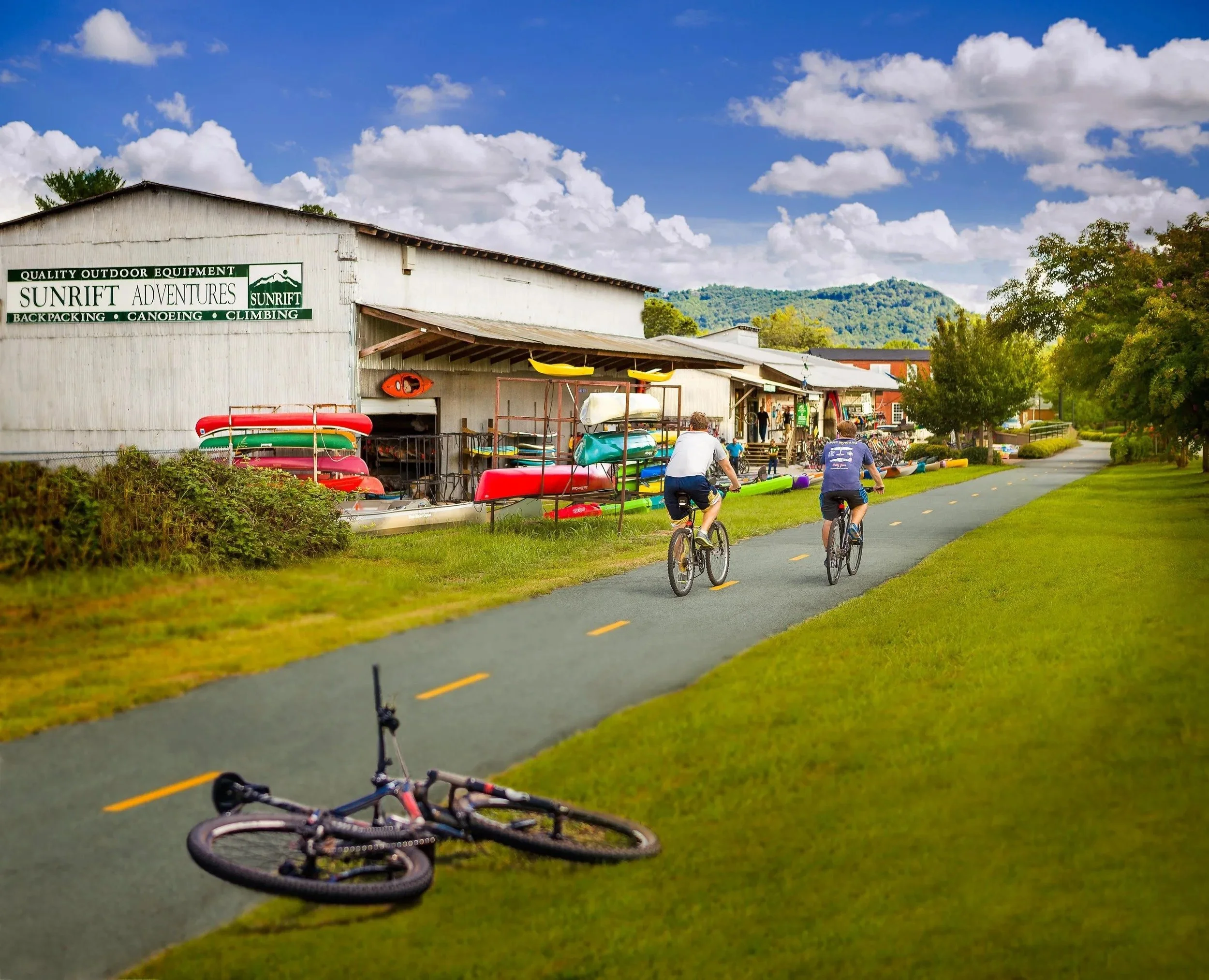
Before the trail, Travelers Rest was largely known as a stopping point along U.S. 25 at the base of the Blue Ridge foothills. The opening and extension of the Swamp Rabbit Trail fundamentally changed that trajectory. Instead of cars passing through, people began arriving on foot and by bicycle—and staying.
A Trail-Centered Downtown Economy
Travelers Rest intentionally oriented its downtown around the trail:
Restaurants, breweries, coffee shops, and outdoor outfitters opened directly adjacent to the trail
Public spaces, trailheads, and wayfinding were designed to make the trail feel like Main Street
Events, farmers markets, and festivals were scheduled to capture trail traffic
Trail users don’t just pass through—they stop, eat, shop, and return.
Small Businesses, Big Impact
Trail-oriented businesses in Travelers Rest benefit from:
Daily local users
Regional visitors from Greenville and beyond
Out-of-state tourists seeking active, outdoor experiences
For many small businesses, the trail provides a steady, low-cost stream of customers that doesn’t rely on highway traffic or large parking lots.
Property Values and Private Investment
Proximity to the Swamp Rabbit Trail has:
Increased demand for nearby residential and mixed-use development
Encouraged reinvestment in older buildings and mill-era properties
Supported higher property values and a broader tax base
Public investment in the trail helped unlock private investment throughout downtown Travelers Rest.
An Outdoor-Forward Community Identity
Perhaps most importantly, the trail helped Travelers Rest define who it is:
A gateway to the mountains
A walkable, bikeable community
A place where outdoor recreation is part of everyday life—not a luxury
The Swamp Rabbit Trail didn’t just boost the economy—it shaped the town’s brand, culture, and sense of place.
Did you know? When communities invest in trails, they’re not just building recreation—they’re building economies.
